Hyperpigmentation & Melasma
Get the treatment you need at Riverchase Dermatology.
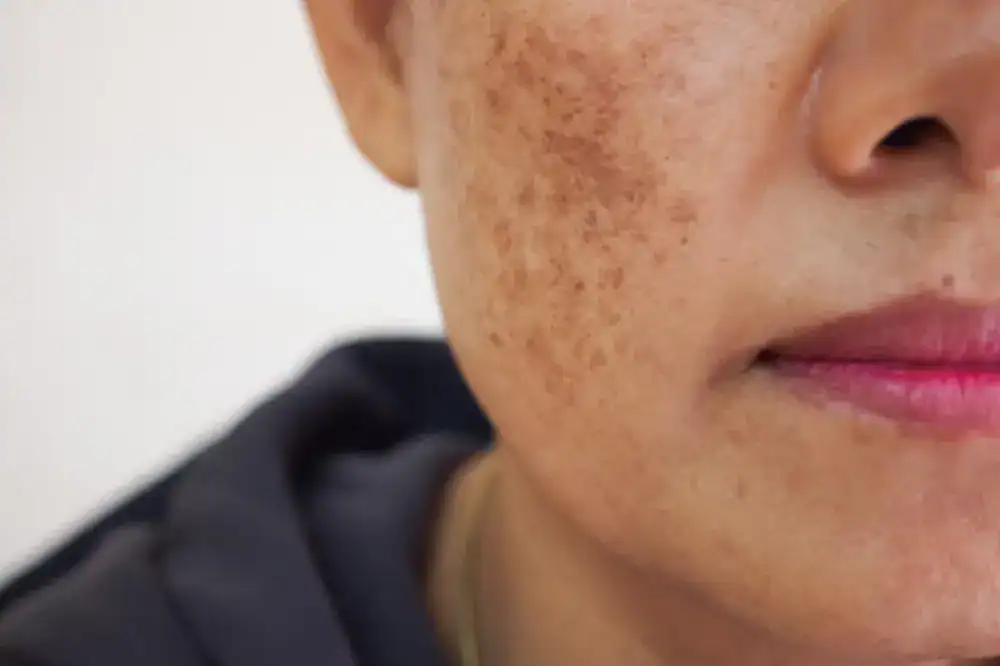
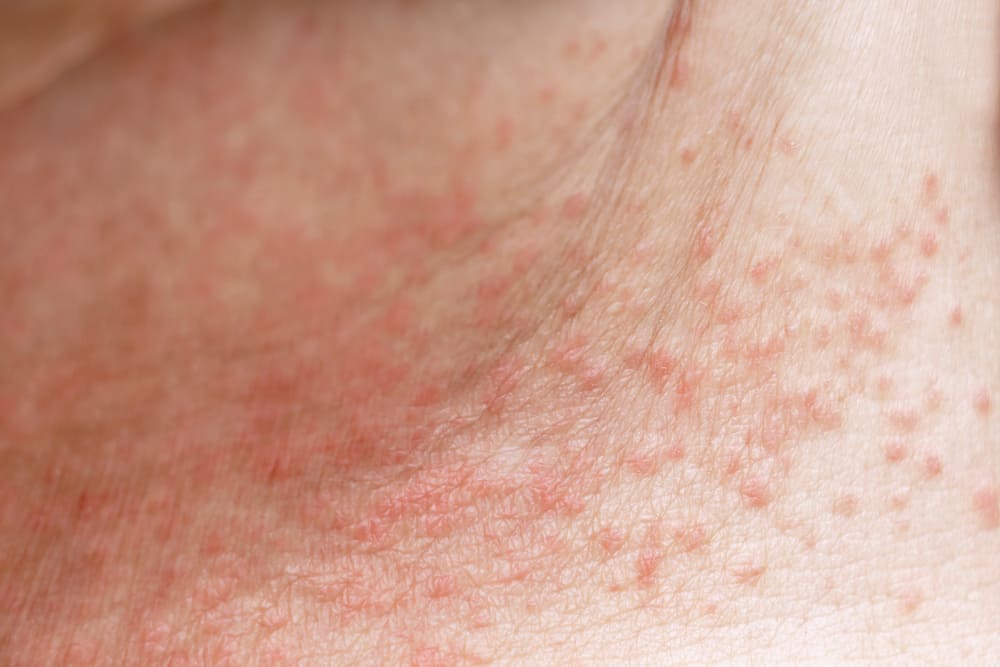
Hyperpigmentation is a skin condition that results in changing skin colors also known as post-inflammatory hyperpigmentation (PIH). Melasma is a specific type of hyperpigmentation that is a common skin problem characterized by the development of dark or tan splotches or patches on the skin. It is most common in women, especially pregnant women, and is sometimes referred to as the “mask of pregnancy.”
Hyperpigmentation & Melasma FAQs
Hyperpigmentation often appears as dark brown or grayish irregular patches on the face, upper cheek, lips, upper lip, nose, chin and forehead. Less commonly, it can appear on the forearms or neck. Melasma has no other symptoms or warning signs, and the symptoms are purely cosmetic. Skin discolorations can be present in all forms, sizes, in large or small quantity or can be widely dispersed.
The condition is uncommon in men. It is estimated that as many as 6 million women in the U.S. and 50 million worldwide have melasma. Women who use birth control pills or birth control patches or who are receiving hormone replacement therapy (HRT) or hormone replacement medications are more prone to developing melasma. Certain ethnic groups appear to be more susceptible to the condition as well, including people of German, Russian or Jewish descent, for example. Native Americans tend to develop melasma on the forearms. The condition is generally slow to develop.
Researchers believe that melasma results from the stimulation of melanocytes. These are pigment-producing cells in the skin that can react to the female hormones estrogen and progesterone. During pregnancy, a woman’s hormones are in greater flux, and the odds of developing melasma increases. Exposure to sunlight also stimulates melanocytes and is, therefore, a direct cause of skin damage and various skin discolorations. People with light to olive or light brown skin are more prone to developing melasma than darker complexions. Doctors suspect that a genetic predisposition to the skin condition may exist.
Treatments for Hyperpigmentation & Melasma
Hyperpigmentation treatment begins with the use of sunscreen and protection every time you are exposed to the sun. Your dermatologist may also use topical bleaching creams, retinoids, steroids, chemical peels or lasers to restore the look of an even skin tone.