Electron Beam Therapy
Get the treatment you need at Riverchase Dermatology.
If you’ve been diagnosed with squamous cell carcinoma or basal cell carcinoma, surgery may not be your only skin cancer treatment option. Electron beam therapy (EBT), a type of external beam radiation therapy, is a highly effective alternative for some people.
Riverchase Dermatology is one of the few dermatology practices in Florida that offers this state-of-the-art type of radiation for skin cancer. Electron beam therapy has a high cure rate and is covered by Medicare and most major insurance carriers.
- For information and appointments, please contact our Naples-Downtown office or call the number below.
Electron Beam Therapy FAQs
EBT uses a very thin, low-energy beam of electrons (negatively charged particles) to deliver precise, tailored doses of radiation, which break apart the DNA in the tumor. The electron beam, produced by a machine called a mobile linear accelerator, is so narrow that it damages cancer cells in the targeted area while avoiding most of the healthy cells around it. The beam is delivered at a depth that matches the thickness of the cancer, so the radiation does not penetrate beneath the cancerous cells.
EBT is usually used as a standalone treatment, but it can also be used after surgery to destroy any remaining cancer cells. + For most patients, skin cancer treatment with electron beam therapy requires four to six weeks of daily treatments, five days a week, for a total of 20 to 30 sessions. The number of treatments depends on the size and location of the tumor as well as the cosmetic outcome you want. A longer course of treatment may result in a better appearance. Visits take as little as eight to 15 minutes. The actual treatment takes 10 to 15 seconds.
Throughout the course of treatment, you can continue your normal everyday activities, including work and exercise.
Unlike other types of radiation, electron beam radiation doesn’t penetrate beneath the superficial layers of skin, so the therapy won’t affect the cartilage or bone beneath the skin cancer. You won’t feel tired or run down as a result of treatment.
Side effects are limited to the treatment site and include dry skin, skin irritation and sunburn-like redness. Prescription creams or lotions can ease these side effects and speed skin healing.
Studies report cure rates ranging from 90% to 98% “” the same as the cure rates for skin cancer surgery. Of course, many factors can affect the likelihood of cure, including the size and location of the cancer, the cancer subtype, and whether the lesion is a recurrence of a previously treated cancer.
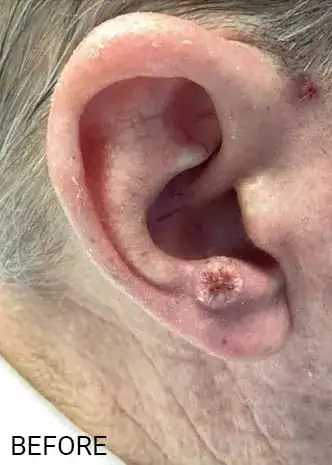
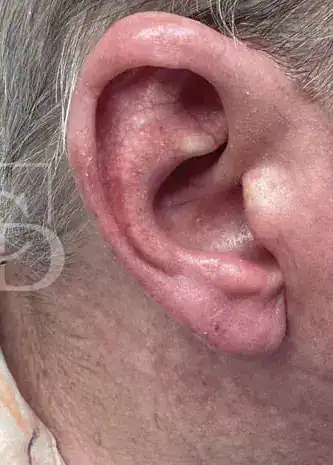
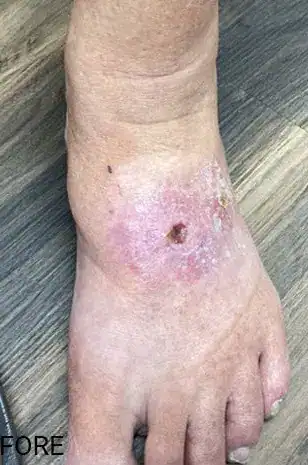
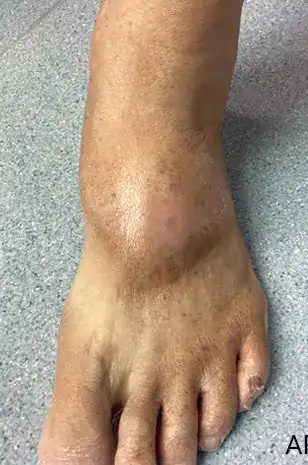
Most of our skin cancer patients who choose EBT are pleased with the results and have minimal scarring or no scarring. Often, the skin looks just as it did before the cancer developed.
Who Is a Candidate for Electron Beam Therapy?
Certain patients with non-melanoma skin cancer may be good candidates for EBT. Your Riverchase Dermatology radiation oncologist may recommend electron beam therapy for basal cell carcinoma or squamous cell carcinoma (cancers that are at or near the surface of the skin) under certain conditions, including if:
- The cancer is located in a delicate or cosmetically sensitive area such as the eyelid, nose, ear or lip, where surgery can be challenging and may require reconstructive surgery after the cancer is removed.
- The cancer is located on a lower extremity, where blood flow can be an issue.
- The tumor is large.
- You can’t undergo surgery for health reasons.
- You prefer a non-surgical treatment.
“Many of my patients are thrilled when they learn there’s a good, non-invasive alternative to surgery for their skin cancer. Patients at other practices are never offered EBT or even told about it.” — Dr. Freeman
Dr. Debra Freeman is a board-certified radiation oncologist who helped bring this therapy to the region and with a Riverchase team, opened the first Mobetron Electron Beam Therapy Center in Southwest Florida.
Before & After Photos